How Road Salt Impacts Your Paint, Wheels, and Undercarriage
Winter roads create a problem that is easy to overlook: road salt.
Salt and other deicing chemicals make winter driving safer by helping melt snow and ice, but they can also accelerate corrosion on vehicles. Salt-laden slush gets pushed onto the body, wheels, wheel wells, suspension components, brake hardware, and undercarriage. If it remains on the vehicle, moisture and chlorides can create conditions that accelerate corrosion over time.
For drivers in South Jersey, where winter weather can mean snow, freezing temperatures, wet roads, and repeated applications of deicing materials, understanding how salt affects your vehicle is an important part of winter car care.
The good news? You do not have to wait until rust appears to do something about it.
Why Is Road Salt So Hard on Cars?
Road salt is primarily sodium chloride, although winter roads can also be treated with other chloride-based deicers, including calcium chloride and magnesium chloride. These materials work by lowering the freezing point of water, helping prevent ice from bonding as strongly to pavement.
The problem starts when those chlorides end up on your vehicle.
Salt residue combines with moisture and can create an environment that promotes corrosion of exposed metals. The effect is particularly important underneath the vehicle, where salty water and road debris can collect and remain in areas that are difficult to see or clean. Federal Highway Administration research identifies chloride exposure, combined with moisture and oxygen, as an important driver of corrosion.
And you do not need to see a pile of white salt on your car for it to matter. Winter slush can carry deicing chemicals into wheel wells, around suspension components, and across the underside of the vehicle.
How Road Salt Affects Your Paint
Your vehicle's paint is more than a cosmetic finish. Along with the underlying protective layers, it helps separate the vehicle's metal surfaces from the environment.
Road salt itself does not simply "eat through" a healthy paint finish overnight. The bigger concern is prolonged exposure, especially when salt residue is allowed to remain on the vehicle or when the finish already has chips, scratches, or other areas of compromised protection.
Salt and road grime stick together
Winter driving creates a mixture of salt, water, dirt, sand, and road debris. That contamination can remain bonded to exterior surfaces until the vehicle is thoroughly washed.
The longer contaminants remain on the finish, the more difficult they can become to remove safely. Aggressive washing or improper tools can then introduce additional surface marring.
Paint chips deserve extra attention
A small rock chip or scratch that exposes underlying metal deserves attention before winter exposure becomes a bigger problem.
AAA specifically recommends repairing paint scratches and chips that expose bare metal because these areas can become starting points for corrosion.
That is why winter protection should begin before the first major storm, not after several weeks of driving through salted roads.
What Does Road Salt Do to Your Wheels?
Your wheels are exposed to some of the harshest conditions on the vehicle.
They sit close to the road, constantly encounter salty water and winter grime, and collect contamination from brake dust and road debris. Wheel barrels and the areas around lug nuts can also be difficult to clean thoroughly.
Depending on the wheel's material and finish, prolonged exposure to corrosive contaminants can contribute to corrosion, staining, finish deterioration, or pitting.
That does not mean every winter-driven wheel will develop visible corrosion. Vehicle design, wheel material, finish condition, exposure, cleaning frequency, and maintenance all influence the outcome.
The practical takeaway is simple: do not treat your wheels as an afterthought during winter washing.
Rinse them regularly and remove salt and accumulated brake dust before deposits have time to build up.
The Undercarriage Is Where Salt Becomes a Bigger Concern
If there is one area of your vehicle that deserves special attention during winter, it is the undercarriage.
You can see salt covering your doors or hood. You cannot easily see what is collecting behind the wheels, around suspension components, along the floor structure, or near other exposed components underneath the vehicle.
AAA recommends frequent washing with particular attention to the undercarriage because removing road salt helps reduce the possibility of rust-related damage.
Corrosion underneath the vehicle can be more than a cosmetic issue. Depending on the component and severity, corrosion can affect brake lines, exhaust components, fuel-system components, electrical connections, suspension parts, and structural areas.
This is why an exterior wash that leaves the undercarriage untouched is not always enough after significant winter exposure.
How Often Should You Wash a Car During Winter?
There is no universal number of days that applies to every driver.
The right frequency depends on weather, road treatment, how much you drive, and how much salt and slush your vehicle encounters.
However, if you have been driving on heavily salted roads, waiting until spring for a thorough wash is a bad strategy.
A practical winter routine is:
- Rinse the vehicle regularly after significant salt exposure.
- Pay particular attention to wheel wells and the undercarriage.
- Use a quality automotive wash product rather than household dish soap.
- Do not allow heavy salt deposits to remain on the vehicle for extended periods.
- Clean wheels separately and thoroughly.
- Address bird droppings, tree sap, and other contaminants promptly.
- Inspect paint chips and scratches before winter and repair exposed areas when appropriate.
AAA recommends frequent washing during winter and a thorough cleaning of the vehicle and undercarriage after the season as well.
Does Ceramic Coating Protect Against Road Salt?
A professionally installed ceramic coating can be a valuable part of a winter protection strategy, but it is important to understand what it actually does.
Ceramic coatings create a bonded protective layer over properly prepared painted surfaces. Their hydrophobic properties can make the surface easier to clean, while their chemical resistance can help the finish withstand exposure to environmental contaminants.
Envy Executive Automotive Protection specifically offers ceramic coating packages designed to help protect against contaminants including road salt, dirt, acid rain, bird droppings, and other environmental exposure.
But ceramic coating does not make a vehicle immune to corrosion or eliminate the need for washing.
Think of it as an additional layer of defense - not a substitute for maintenance.
A properly maintained coated vehicle can be easier to keep clean because contamination is less likely to bond as aggressively to the treated surface. That makes regular winter maintenance more manageable.
What About Paint Protection Film?
PPF solves a different part of the problem.
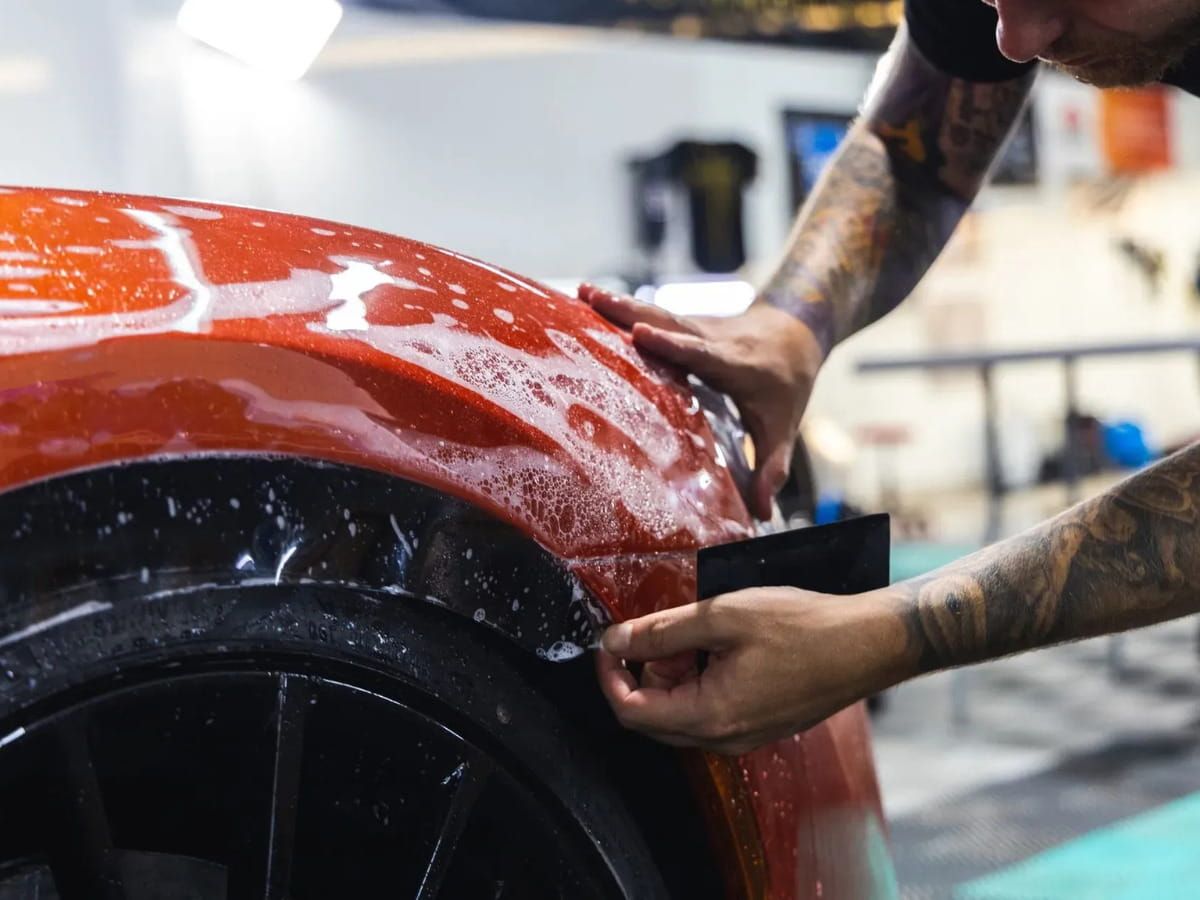
Paint protection film is particularly useful in areas exposed to road debris and minor abrasions. Envy Executive Automotive Protection offers self-healing STEK Paint Protection Film designed to help protect vulnerable painted surfaces from everyday road hazards.
That makes PPF especially useful on areas such as:
- Front bumpers,
- Hood,
- Front fenders,
- Side mirrors,
- Rocker panels,
- Other high-impact areas.
However, PPF is not an undercarriage corrosion treatment.
Its primary role is physical protection of the surfaces where road debris can cause chips and abrasions. Ceramic coating, meanwhile, focuses more on surface protection, chemical resistance, hydrophobicity, and easier maintenance.
For drivers who want comprehensive exterior protection, combining the two can make sense because they address different risks.
Ceramic Coating vs. PPF for Winter Protection
Which one should you choose?
It depends on what you are trying to protect against.
| Protection | Ceramic Coating | PPF |
|---|---|---|
| Road salt contamination | Yes | Limited/secondary benefit |
| Easier cleaning | Yes | Yes |
| Chemical resistance | Yes | Yes, depending on film |
| Rock-chip protection | Limited | Strong |
| Minor abrasion protection | Limited | Stronger |
| Hydrophobic surface | Yes | Many films can be hydrophobic |
| Undercarriage protection | No | No |
| Best use | Surface protection & easier maintenance | 10 years |
For a daily driver exposed to South Jersey winters, a combination of proper washing + ceramic coating + strategically installed PPF can provide a more complete exterior protection strategy than relying on any one product alone.
Can Road Salt Damage a Ceramic Coating?
Ceramic coatings are designed to resist environmental contaminants, but they are not indestructible.
Harsh chemicals, improper washing, accumulated contamination, and neglected maintenance can affect the condition and performance of a coating over time.
If a coated vehicle looks dirty after driving through a winter storm, that does not mean the coating has failed.
It means the vehicle needs to be cleaned.
Hydrophobic behavior is useful because it can help make contamination easier to remove, but it does not eliminate contamination.
What Is the Best Way to Remove Road Salt?
The objective is to remove the contamination without creating new damage.
Start with a thorough rinse to loosen and remove loose salt, sand, and winter debris. Pay special attention to the wheel wells and undercarriage.
Then wash the exterior using products intended for automotive finishes and clean microfiber tools. Avoid aggressive scrubbing, especially when the surface is covered with loose grit.
For vehicles with ceramic coatings or PPF, follow the maintenance recommendations appropriate for the specific coating or film.
The most important principle is simple:
- Remove contamination with water and proper washing techniques before trying to physically scrub it away.
For severe winter buildup, a professional detail can also provide a more thorough cleaning and inspection.
What Should You Check After Winter?
Once winter is over, do not simply wash the outside of the vehicle and move on.
Inspect:
- Paint chips and scratches,
- Areas around wheel arches,
- Wheel faces and barrels,
- Wheel wells,
- Undercarriage,
- Visible suspension components,
- Brake lines and other exposed hardware,
- Areas where mud and salt accumulate,
- PPF edges and condition,
- Ceramic coating performance and surface contamination.
If you notice visible rust, damaged paint, unusual brake behavior, fluid leaks, or corrosion on critical components, a detailing service is not a substitute for mechanical inspection and repair.
Road salt-related corrosion can become a safety issue when critical components are affected.
How South Jersey Drivers Can Reduce Winter Salt Damage
You cannot control how much salt is applied to the roads.
You can control how long that salt remains on your vehicle.
A sensible winter protection plan looks like this:
Before winter:
Inspect the paint, repair exposed chips when appropriate, thoroughly clean the vehicle, and consider ceramic coating or PPF based on your driving needs.
During winter:
Wash regularly, rinse the undercarriage, clean the wheels, and remove heavy salt buildup rather than allowing it to accumulate.
After winter:
Give the vehicle and undercarriage a thorough cleaning and inspect for corrosion, chips, scratches, and other damage.
This approach is much more effective than waiting for visible rust and trying to correct the problem afterward.
Protect Your Vehicle Before Winter Damage Becomes Visible
Road salt is a necessary part of winter road maintenance, but its corrosive effects on vehicles are well documented. The greatest risk is repeated exposure combined with moisture, contamination, and inadequate cleaning.
The best defense is therefore not one product. It is a combination of regular maintenance and the right protection for the way you drive.
Ceramic coating can make painted surfaces easier to maintain and provide additional resistance against environmental contaminants. PPF can protect high-impact painted areas from road debris and minor abrasions. And regular washing, especially of the wheels, wheel wells, and undercarriage—remains essential.
At Envy Executive Automotive Protection, we help South Jersey drivers choose protection based on their vehicle, driving habits, and long-term goals. From professional ceramic coatings and STEK Paint Protection Film to detailing and paint correction, our focus is helping you maintain its condition through the challenges of everyday driving.
If your vehicle sees South Jersey roads all winter, protecting it before the salt builds up can be one of the smartest maintenance decisions you make.
Envy Executive CW Blog